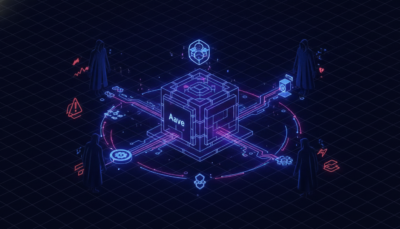


Algorand Charts a Course for Quantum-Safe Blockchain by 2027
The rapid advancement of computing power, particularly in the burgeoning field of quantum computing, presents a significant long-term challenge to the security of existing cryptographic systems. Recognizing this potential threat, Algorand, a prominent layer-1 blockchain platform, has announced ambitious plans to integrate quantum resilience into its core infrastructure. The network aims to achieve comprehensive protection against quantum computer attacks by the year 2027, signaling a proactive approach to safeguarding decentralized finance (DeFi) and other Web3 applications.
The Quantum Threat to Cryptography
Quantum computers, unlike classical computers that store information as bits representing either 0 or 1, utilize quantum bits or qubits. Qubits can exist in multiple states simultaneously (superposition) and can be linked together in a phenomenon called entanglement. These capabilities allow quantum computers to perform certain calculations exponentially faster than even the most powerful supercomputers today. This includes tasks related to breaking the public-key cryptography that underpins much of today’s digital security, including the digital signatures and encryption used in blockchain technology.
If a sufficiently powerful quantum computer were to become a reality before networks are prepared, it could theoretically compromise the integrity and security of existing blockchains. This could lead to the unauthorized alteration of transaction histories, the theft of digital assets, and a general erosion of trust in decentralized systems. While the timeline for the development of cryptographically relevant quantum computers remains a subject of debate among experts, many in the tech and security communities believe it is prudent to prepare for such an eventuality.
Algorand’s Strategy for Quantum Resilience
Algorand’s strategy for achieving quantum resilience involves a multi-pronged approach focusing on its account and consensus mechanisms. The network is actively developing and testing new cryptographic primitives and protocols that are resistant to attacks from both classical and quantum computers. This includes exploring post-quantum cryptography (PQC) algorithms, which are designed to withstand the computational power of quantum machines.
Evolving Account Structures
One key area of focus is the evolution of Algorand’s account structures. Traditional account models in blockchain often rely on digital signature schemes that could be vulnerable to quantum algorithms like Shor’s algorithm. Algorand is working on implementing new signature schemes that offer equivalent security guarantees against quantum threats. This might involve transitioning to hash-based signatures or lattice-based cryptography, which are considered more resistant to quantum attacks.
Securing the Consensus Mechanism
The consensus mechanism, the process by which network participants agree on the validity of transactions, is another critical component that needs quantum hardening. Algorand’s Pure Proof-of-Stake (PPoS) consensus is already known for its security and efficiency. However, the network is investigating how to ensure that the underlying cryptographic operations within the PPoS protocol remain secure in a post-quantum era. This ensures that the network’s ability to reach agreement on the state of the ledger is not compromised by future quantum capabilities.
Why Proactive Measures Matter
Algorand’s commitment to quantum resilience highlights a growing awareness within the blockchain industry of the need for forward-thinking security measures. By addressing the quantum threat years in advance, Algorand aims to provide its users and developers with a high degree of confidence in the long-term security and viability of its platform.
- Future-Proofing: Ensures the network remains secure as quantum computing technology matures.
- Investor Confidence: Demonstrates a commitment to robust security, attracting and retaining users and developers.
- Industry Leadership: Positions Algorand as a leader in anticipating and mitigating emerging technological risks.
The transition to quantum-resistant cryptography is a complex undertaking that will require significant research, development, and eventual network upgrades. Algorand’s stated goal of achieving this by 2027 indicates a clear roadmap and a dedication to staying ahead of potential threats, ensuring its place as a secure and reliable platform for the future of decentralized applications and finance.