
Bitcoin and Ether Approach Critical Support Levels
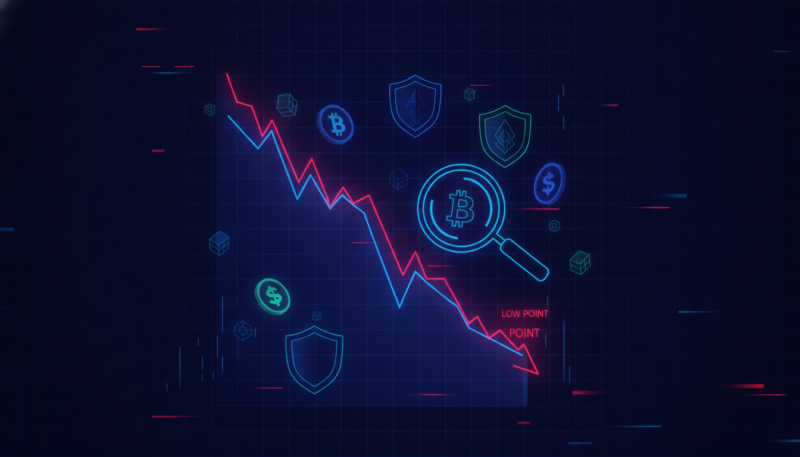
The cryptocurrency market has witnessed a notable downturn, with Bitcoin (BTC) hovering near its 2024 lows. This price action indicates increased selling pressure and growing investor apprehension. Ether (ETH), the second-largest digital asset, is also experiencing similar weakness, approaching its own support thresholds. This broad market slide has put many digital assets under pressure, prompting traders to seek ways to mitigate potential losses.
Options Market Signals Downside Concerns
The recent price movements have been accompanied by a significant shift in the options market. Traders are increasingly willing to pay a premium for options that offer protection against further price declines, commonly known as “puts.” This heightened demand for downside protection suggests that market participants anticipate further volatility and potential drops in the prices of major cryptocurrencies.
The cost of these put options has risen, reflecting the perceived risk in the market. When more traders buy put options, the demand increases, driving up their prices. This behavior is a clear indicator that caution is the prevailing sentiment among those actively trading crypto derivatives.
Understanding Options and Hedging
Options contracts provide flexibility for investors. A put option gives the holder the right to sell an asset at a predetermined price (the strike price) before the option expires. If the asset’s market price falls below the strike price, the put option gains value, acting as a hedge against losses on a long position in the underlying asset.
Conversely, a call option gives the right to buy an asset at a specific price. The current market sentiment, evidenced by the increased demand for put options, suggests that a majority of active traders are positioning themselves for a downward price trend, or at least seeking to insure their existing holdings against such a scenario.
DeFi Tokens Face the Brunt of the Sell-off
While the broader cryptocurrency market has retreated, Decentralized Finance (DeFi) tokens have been disproportionately affected. Many DeFi assets have fallen more sharply than Bitcoin or Ether, indicating a greater sensitivity to market downturns. This could be attributed to several factors:
- Higher Risk Appetite: DeFi as a sector often attracts investors with a higher risk tolerance. During market downturns, these investors may reduce their exposure to riskier assets first.
- Liquidity Concerns: In times of market stress, liquidity can dry up, impacting smaller-cap or less established DeFi tokens more severely.
- Regulatory Uncertainty: Evolving regulatory landscapes can create uncertainty for DeFi projects, leading to sell-offs when broader market sentiment turns negative.
- Protocol-Specific Issues: Some DeFi protocols may face unique challenges or vulnerabilities that become more apparent during turbulent market periods.
The outsized losses in DeFi highlight the interconnectedness and sometimes fragile nature of these newer financial ecosystems within the broader crypto market.
Notable Exceptions: XLM and LIT
Amidst the widespread decline, certain tokens have managed to buck the trend. Notably, Stellar Lumens (XLM) and LIT (LIT token) have shown resilience, even recording gains while other digital assets faltered. The reasons behind such divergences can be varied:
- Specific Project Developments: Positive news or development updates related to XLM or LIT could be driving independent demand.
- Partnerships and Integrations: New partnerships or successful integrations within their respective ecosystems can boost investor confidence.
- Market Maker Activity: Sometimes, specific trading strategies or market maker activities can temporarily decouple a token’s performance from the broader market.
- Lower Correlation: Certain assets may have lower correlation to Bitcoin and Ether, making them less susceptible to the general market sentiment.
These exceptions serve as a reminder that while the overall market trend is important, individual project fundamentals and specific market dynamics can lead to isolated strength.
Looking Ahead: What’s Next for Bitcoin and DeFi?
As Bitcoin approaches critical support levels, the market will be closely watching for signs of stabilization or a further breakdown. The increased hedging activity in the options market suggests a cautious outlook, and traders will be looking for confirmation of either a sustained recovery or a deeper correction.
The performance of DeFi tokens will also be a key indicator of overall market health. A continued sell-off in DeFi could signal broader systemic issues or a prolonged bear cycle, while a swift recovery might indicate resilience and strong underlying demand for decentralized financial services.
Investors are advised to monitor key technical levels, understand the implications of derivatives market activity, and stay informed about developments within the DeFi space. The coming days and weeks will be crucial in determining the short-to-medium term trajectory for these digital assets.