
Tokenization’s Evolving Narrative: From Hype to Institutional Utility
The world of blockchain and digital assets has often been characterized by its focus on consumer-facing applications and the promise of decentralized finance (DeFi). While concepts like 24/7 trading and immediate liquidity have captured the public imagination, a more profound and potentially transformative application is emerging for large-scale financial institutions. Giselle Lai, a key figure at Fidelity International, suggests that the true long-term value of tokenization for entities like pension funds lies not in round-the-clock trading, but in the sophisticated management of their balance sheets.
Rethinking Liquidity: A Misunderstood Benefit
For years, the allure of blockchain technology for traditional finance has been tied to its ability to offer continuous trading windows, breaking free from the constraints of traditional market hours. While this is an undeniable benefit, Lai argues that it is secondary to the operational efficiencies and strategic advantages tokenization can unlock for institutional balance sheets. Large funds often deal with complex, illiquid assets and vast portfolios that require meticulous management to ensure compliance, optimize returns, and mitigate risk.
The Power of Tokenization in Balance-Sheet Management
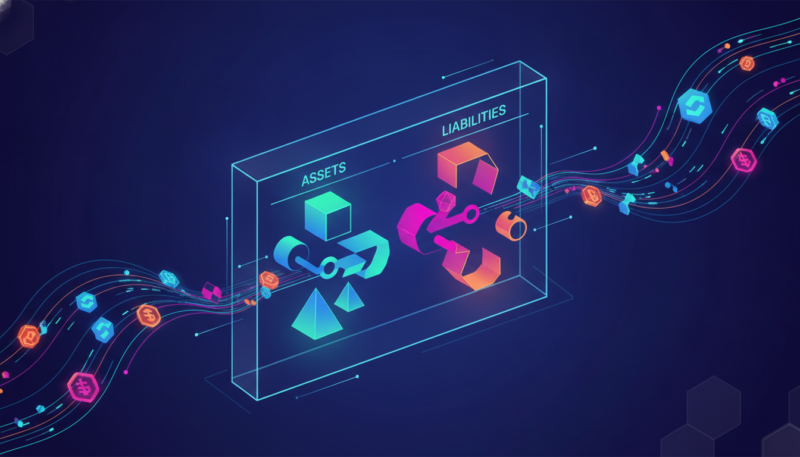
Balance-sheet management is a critical discipline for any financial institution. It involves tracking, optimizing, and strategically deploying assets and liabilities to ensure solvency, profitability, and adherence to regulatory requirements. Tokenization offers several compelling ways to enhance this process:
- Enhanced Record Keeping and Reconciliation: Blockchain’s inherent transparency and immutability can drastically simplify record keeping. Each transaction, asset transfer, or ownership change can be immutably recorded, reducing the need for costly and time-consuming reconciliation processes between various internal systems and external custodians. For a pension fund managing billions across diverse asset classes, this can translate into significant operational cost savings and a reduction in errors.
- Streamlined Compliance and Reporting: Regulatory compliance is a major burden for large institutions. Tokenized assets can be programmed with embedded compliance rules. For example, transfer restrictions, accredited investor verification, or specific holding periods can be coded directly into the token. This automates many compliance checks, making reporting to regulators more efficient and accurate.
- Improved Asset Servicing: From dividend distribution to corporate actions, managing the lifecycle of assets is complex. Tokenization can automate many of these processes. For instance, dividend payments could be automatically distributed to token holders’ digital wallets upon the occurrence of a corporate event, directly updating the ledger.
- Greater Transparency and Auditability: The distributed ledger provides a single, shared source of truth accessible to authorized parties. This enhances auditability, allowing auditors to verify transactions and holdings more easily and with greater confidence. This increased transparency can also foster greater trust among stakeholders, including beneficiaries and regulators.
- Efficient Capital and Collateral Management: Tokenization can create more dynamic and efficient systems for managing capital allocation and collateral. For instance, tokenized securities could be used more effectively as collateral in various financial transactions, potentially unlocking liquidity and reducing financing costs. The ability to precisely track and manage ownership stakes of various assets on the ledger improves the overall efficiency of capital deployment.
Tokenization as a Strategic Tool
Lai’s perspective reframes tokenization not just as a technological upgrade, but as a strategic tool for financial institutions. By leveraging blockchain’s capabilities, organizations can gain deeper insights into their financial structure, automate complex processes, and reduce operational risks. This shift from focusing on the ‘how’ of trading (24/7 access) to the ‘what’ and ‘why’ of ownership and management (balance sheet optimization) represents a maturing understanding of blockchain’s potential in the institutional space.
The Future of Institutional Finance
As more institutions like Fidelity explore and advocate for these use cases, the adoption of tokenization is likely to move beyond speculative applications. The focus will increasingly be on building robust, efficient, and compliant financial infrastructure. For pension funds and other large asset managers, tokenization offers a pathway to fundamentally improve how they manage their core financial health, ensuring stability and optimal performance for the long term. This evolution suggests a future where blockchain is not just a disruptive force, but an integral component of sophisticated financial management.