

Tokenization: The Next Frontier or Overhyped Promise?
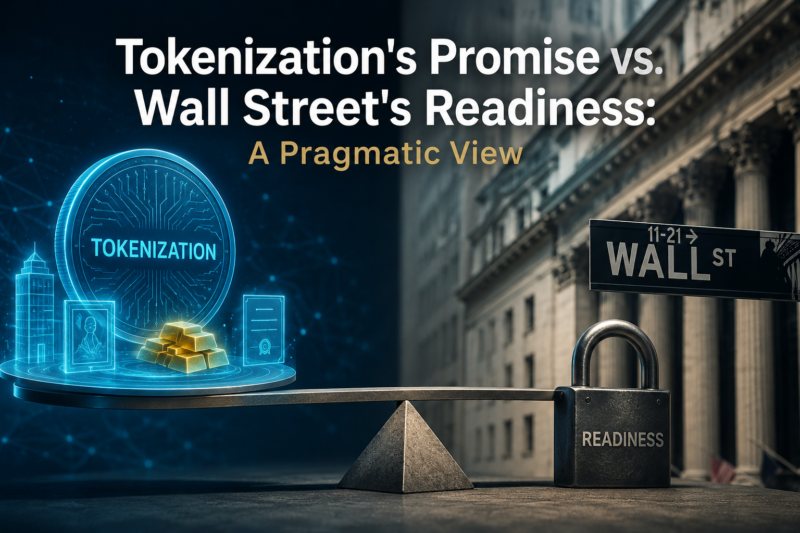
The concept of tokenization, the process of converting rights to an asset into a digital token on a blockchain, has generated considerable excitement. Proponents envision a future where securities, real estate, and even art can be seamlessly traded, settled, and managed with unprecedented efficiency. However, a stark warning from a key industry figure suggests that the market’s enthusiasm may be outpacing the practical readiness of existing financial systems.
Henri Arslanian, co-founder of 21Shares, a prominent issuer of crypto exchange-traded products, has voiced concerns that the widespread adoption of tokenized assets by traditional Wall Street institutions is still a distant reality. While acknowledging the transformative potential of tokenization, Arslanian emphasizes that the underlying infrastructure required to support such a paradigm shift is not yet sufficiently developed to handle the scale and complexity demanded by institutional players.
The Allure of Tokenization
At its core, tokenization promises to revolutionize asset management and trading. By creating digital representations of physical or financial assets, it can unlock several key benefits:
- Enhanced Liquidity: Tokenizing illiquid assets, such as real estate or private equity, could enable fractional ownership and broader market access, thereby increasing their tradability.
- Streamlined Settlement: Blockchain technology can facilitate near-instantaneous settlement of transactions, significantly reducing counterparty risk and the lengthy settlement cycles common in traditional finance (e.g., T+2).
- Improved Transparency and Traceability: The immutable nature of blockchain ledgers provides a clear and auditable trail for asset ownership and transaction history.
- Reduced Costs: By cutting out intermediaries and automating processes, tokenization has the potential to lower transaction fees and administrative overhead.
The Infrastructure Gap: A Major Hurdle
Despite these compelling advantages, the path to institutional tokenization is fraught with challenges. Arslanian’s caution highlights a critical disconnect between the futuristic vision of tokenized markets and the current state of financial infrastructure. Several key areas require significant development and integration:
Regulatory Clarity and Compliance
One of the most significant roadblocks is the lack of comprehensive and consistent regulatory frameworks globally. Regulators are still grappling with how to classify and oversee tokenized assets, which creates uncertainty for institutions hesitant to engage in activities that might fall outside existing legal boundaries. Establishing clear rules for issuance, trading, custody, and investor protection is paramount.
Interoperability and Standardization
The financial ecosystem is a complex web of interconnected systems. For tokenization to scale, new digital assets and platforms must be able to seamlessly interact with existing financial infrastructure, such as traditional trading venues, custodians, and payment systems. A lack of standardization across different blockchain protocols and token formats further complicates interoperability, leading to fragmented markets.
Technological Scalability and Security
While blockchains are inherently secure, the broader technological stack supporting tokenization, including smart contracts and off-chain components, needs to be robust and scalable. Ensuring the security of tokenized assets against cyber threats and validating the integrity of complex financial instruments represented by tokens are ongoing concerns.
Market Infrastructure Development
The market infrastructure itself—the exchanges, custodians, and clearinghouses—needs to evolve to accommodate tokenized assets. This involves developing new trading platforms, secure custody solutions capable of handling digital assets, and robust risk management tools tailored to the unique characteristics of tokens.
The Path Forward: Incremental Progress
Arslanian’s warning is not a dismissal of tokenization’s potential but a call for realism. The journey towards widespread institutional adoption will likely be gradual, characterized by pilot programs, regulatory sandboxes, and incremental integration rather than an overnight revolution. Financial institutions are actively exploring the technology, but they require assurances regarding regulatory compliance, operational security, and the seamless integration of tokenized assets into their existing workflows.
As the technology matures and regulatory landscapes become clearer, tokenization will undoubtedly play a more significant role in finance. However, for now, the hype must be tempered with a pragmatic understanding of the substantial infrastructural and regulatory groundwork that still needs to be laid. The promise is immense, but the reality check is essential for sustainable growth in the tokenized asset space.