
The Ascent of Tokenized Real-World Assets in Decentralized Finance
The cryptocurrency market, often characterized by its inherent volatility, is witnessing a significant shift towards the integration of real-world assets (RWAs) onto the blockchain. This trend, often referred to as tokenization, is not only diversifying the DeFi landscape but also attracting a new wave of institutional and retail interest. Despite broader market fluctuations, the surge in tokenized RWAs signals a maturing ecosystem poised for substantial growth.
Understanding Tokenized Real-World Assets
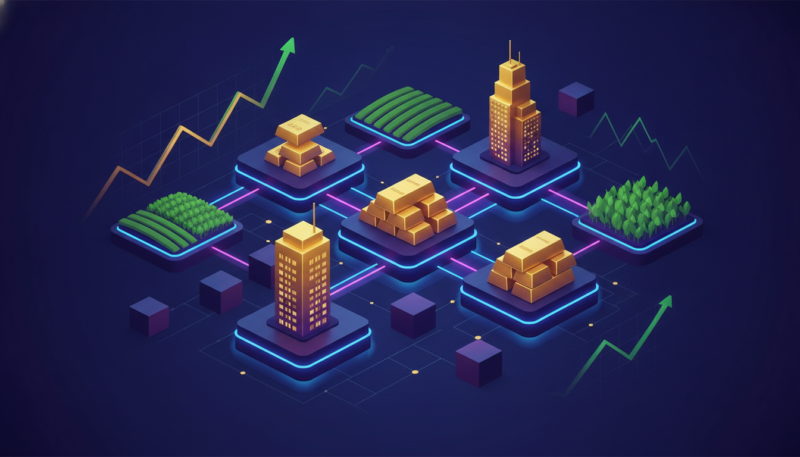
Tokenization involves converting the rights to an asset into a digital token on a blockchain. This process can be applied to virtually any asset, including:
- Real Estate: Fractional ownership of properties, making illiquid assets more accessible.
- Commodities: Gold, oil, and agricultural products can be tokenized for easier trading and hedging.
- Bonds and Equities: Representing traditional financial instruments on-chain to leverage DeFi’s efficiency.
- Art and Collectibles: Enabling fractional ownership and provenance tracking for high-value items.
The primary benefits of tokenizing RWAs include enhanced liquidity, fractional ownership, increased transparency, reduced transaction costs, and global accessibility. By bringing these tangible assets into the digital realm, DeFi protocols can unlock vast new pools of capital and create innovative financial products.
Kraken’s SpaceX IPO xStocks: A Glimpse into the Future
Exchanges are actively exploring innovative ways to bridge traditional finance with the digital asset space. Kraken’s recent launch of ‘SpaceX IPO xStocks’ is a prime example. These instruments allow users to gain exposure to the potential future value of a company’s stock, like SpaceX, prior to its actual public offering. While these are not direct stock ownership, they represent a significant step in offering derivative-like products tied to real-world financial events within a crypto-centric platform.
This development highlights the growing demand for alternative investment vehicles and the potential for crypto platforms to become gateways to a wider array of financial markets. It also underscores the intricate regulatory landscape that surrounds such offerings, as platforms navigate the complexities of securities laws across different jurisdictions.
Prediction Markets Outpace On-Chain Gambling
Another burgeoning area within the DeFi ecosystem is prediction markets. Unlike traditional on-chain gambling, which often focuses on simple outcomes, prediction markets allow users to bet on the likelihood of future events, ranging from political elections to economic indicators. Platforms like Augur and Polymarket have seen significant traction, demonstrating the utility of decentralized platforms for aggregating information and providing price discovery for future outcomes.
The growth in prediction markets signifies a maturing understanding of blockchain technology’s application beyond speculative trading. They leverage smart contracts to create transparent and immutable markets, where outcomes are resolved automatically based on verifiable data feeds. This innovation offers a novel way for individuals to engage with information and express their views on future events, creating a more dynamic and interactive decentralized web.
Navigating Regulatory Headwinds and Market Volatility
The crypto industry, and by extension DeFi, continues to grapple with regulatory uncertainty. High-profile legal cases and evolving compliance requirements present ongoing challenges for projects and exchanges. The mention of Sam Bankman-Fried seeking a Trump pardon, while a sensational detail, indirectly points to the broader scrutiny and legal entanglements that have impacted the space, emphasizing the need for robust legal and ethical frameworks.
Despite these hurdles, the innovation within DeFi is undeniable. The increasing interest in tokenized RWAs, coupled with novel offerings like Kraken’s xStocks and the sophisticated utility of prediction markets, indicates a strong underlying momentum. As the technology matures and regulatory clarity hopefully emerges, the convergence of real-world value and decentralized finance is set to redefine the future of financial markets.