

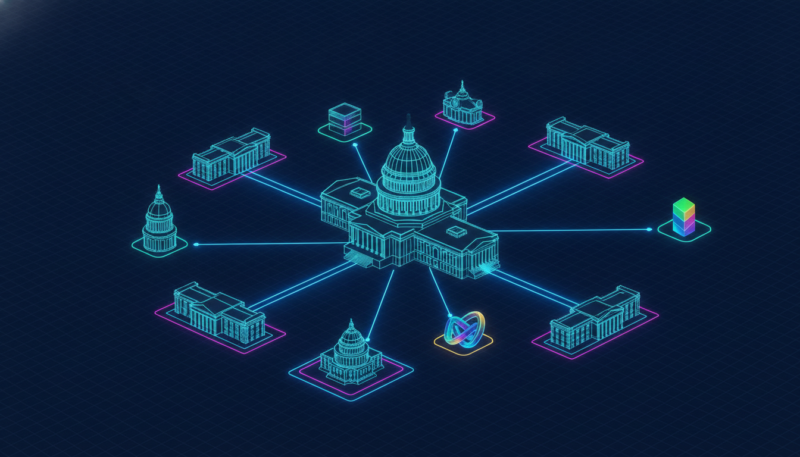
Senators Advocate for State Authority in Stablecoin Oversight
A bipartisan group of United States senators, spearheaded by Republican Senator Cynthia Lummis, has formally requested that the Treasury Department actively involve state financial regulators in the development and implementation of stablecoin supervision frameworks. This push comes in response to the proposed GENIUS Act, which aims to establish a clear regulatory pathway for stablecoins within the United States. The senators are emphasizing the critical need for a process that allows states to demonstrate their capacity to effectively supervise these digital assets, ensuring a robust and comprehensive regulatory landscape.
The Genesis of the GENIUS Act and its Implications
The GENIUS Act, while still under consideration, represents a significant legislative effort to bring clarity and structure to the burgeoning stablecoin market. Stablecoins, designed to maintain a stable value relative to a specific asset, such as the US dollar, are crucial for the functioning of many decentralized finance (DeFi) applications and for facilitating digital asset transactions. However, their rapid growth has also attracted the attention of regulators concerned about potential risks, including financial stability, consumer protection, and illicit finance.
The proposed legislation seeks to define the roles and responsibilities of various regulatory bodies, including federal agencies like the Treasury Department and the Federal Reserve, as well as state-level authorities. Senator Lummis and her colleagues argue that excluding states from this process would create regulatory gaps and potentially undermine the effectiveness of the overall framework. They believe that states possess unique insights and established mechanisms for consumer protection and financial supervision that are invaluable to the stablecoin regulatory process.
Why State Involvement Matters in Stablecoin Regulation
The argument for state involvement hinges on several key points:
- Localized Expertise: State regulators often have a deeper understanding of the specific financial ecosystems and consumer bases within their jurisdictions. This localized expertise can help tailor regulations to address unique regional concerns.
- Consumer Protection: Many states already have robust consumer protection laws and enforcement mechanisms in place. Integrating these existing frameworks into stablecoin regulation can provide a more immediate and effective layer of protection for individuals.
- Innovation and Competition: A fragmented regulatory approach, where states can develop their own approaches, could stifle innovation. However, a collaborative federal-state model can foster healthy competition while ensuring a baseline level of security and compliance. The senators propose a system where states can prove their capabilities, allowing them to maintain a significant supervisory role.
- Regulatory Efficiency: By leveraging existing state infrastructure and expertise, the regulatory process can potentially become more efficient, reducing duplication of efforts and streamlining compliance for stablecoin issuers.
Treasury Department’s Role and Senatorial Pressure
The senators are specifically urging the Treasury Department to establish a clear process within the framework of the GENIUS Act for states to demonstrate their ability to supervise stablecoins. This implies a requirement for states to meet certain standards or criteria set by the Treasury, after which they would be empowered to carry out specific supervisory functions. This approach seeks to balance federal oversight with state-level autonomy and operational capacity.
The Treasury Department’s response to this call for collaboration will be pivotal. Historically, the regulation of financial services in the United States has often involved a complex interplay between federal and state authorities. The outcome of this debate surrounding the GENIUS Act could set a precedent for how future digital asset legislation is structured, determining the balance of power and responsibility between different levels of government in overseeing this rapidly evolving sector.
Looking Ahead: A Collaborative Regulatory Future?
The ongoing dialogue between senators and the Treasury Department highlights the challenges and opportunities in regulating innovative financial technologies like stablecoins. The push for state involvement reflects a desire for a regulatory environment that is both effective and adaptable, one that can harness the benefits of digital assets while mitigating potential risks. As the legislative process unfolds, the commitment to ensuring states have a voice and a role in supervising stablecoins will be a key determinant in shaping the future of digital finance in the US.